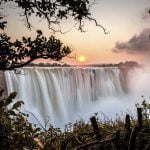


Coffee at dawn, rapids by mid-morning, chilling in the afternoon. Here’s the real rhythm of our multi-day river trips.
On many multi-day river trips, the day starts with a 6:30 a.m. coffee call and winds down around 9:30 p.m. In addition to lunch on the river, getting to camp by mid-afternoon, and a guide-cooked dinner, you can expect about four to six hours on the water. Much of the time is active floating, paddling, and navigating. Remarkably, the rapids themselves fill maybe an hour.
That last part surprises almost everyone.
First-timers spend weeks worrying about the whitewater, then get blindsided by what nobody mentioned: wet socks at 5 p.m., sand in the tent, the river toilet. We want to show you the whole day, so nothing catches you off guard.
What does a typical day on a multi-day river trip look like?
Every river and water level shifts the schedule a little. But after decades of guiding on rivers from Patagonia to southern Africa, we see the same basic rhythm almost everywhere.
| Time | What’s happening | What you’re doing |
| 6:30 a.m. | Coffee call | Waking up to a guide’s shout and a hot mug |
| 7:00 a.m. | Breakfast | Eating big, packing up your sleeping kit |
| 8:00 a.m. | Loading boats | Passing bags down the line, cinching your life jacket |
| 8:30 a.m.–12:30 p.m. | Morning on the water | Paddling, scouting rapids, floating the flats |
| 12:30 p.m. | Lunch on shore | Sandwich spread, shade, maybe a swim |
| 1:30–4:00 p.m. | Afternoon run | More river, sometimes a side hike |
| 4:00 p.m. | Arriving at camp | Unloading, changing, claiming a tent spot |
| 5:00–7:00 p.m. | Free time | Reading, napping, fishing, exploring |
| 7:00 p.m. | Dinner | Eating something better than you expected |
| 9:30 p.m. | Lights out | Mostly by choice. You’ll be tired. |
Notice how much of that chart isn’t rafting.
Why are the rapids such a small part of the day?
Here’s a framework we share with first-timers: the 90/10 split. Roughly 10% of a river day is whitewater. The other 90% is flatwater floating, meals, time in camp, and simply being in a stunning place.
That’s not a downside. That’s the point.
It does change how you should prepare, though. Most people train for the 10%, buying paddling gloves or squeezing in extra push-ups.
The guests who have the best trips prepare for the 90%: a good book, a warm camp layer, and the patience to let a day unfold… without a screen.
What actually happens when you pull into camp?
Camp arrival is the busiest hour of the day, and the one first-timers can find challenging. Unloading the boats, the kitchen setup. Everyone is suddenly wet, hungry, and hunting for flat ground.
Follow the 20-minute dry-out rule
Get out of wet clothes within 20 minutes of landing. Damp layers plus an evening breeze is how a great day turns into a shivery night.
Change first. Then help set up.
Pick your tent spot like a guide
Avoid low spots where cold air settles overnight. Look for sand over rock, and check for ant hills before you stake down.
As tempting as it might be to get the full river experience from shore, don’t overlook this tip: avoid pitching right beside a loud rapid unless you love white noise. Some people sleep better than ever. Others lie awake. Bring your earplugs. They weigh nothing.
Understand the river loo before you need it!
Many rivers require human waste to be packed out, so camps use a portable toilet system. It’s usually tucked away with a surprisingly good view. Your guides will show you how it works and how to tell if it’s occupied.
Questions? Ask before bed on night one, not at 2 a.m.
What to pack, and what can you leave at home?
Your gear lives in two places: a small dry bag you can reach during the day, and a larger camp bag you won’t see until evening. Packing for that split is the most useful prep you can do.
Day bag checklist:
- Sunscreen and SPF lip balm
- Sunglasses with a retainer strap
- Warm synthetic or fleece layer (never cotton)
- Rain jacket or splash top
- Water bottle with a clip
- Any medication you need during the day
Camp bag checklist:
- A full set of dry clothes, socks included
- Warm hat and insulated jacket
- Camp shoes that aren’t your river shoes
- Headlamp
- Earplugs
- A book or journal
Leave at home: cotton river clothes, jewelry you’d hate to lose, and the expectation of staying perfectly clean.
What if something goes sideways on the river?
Rafting is an outdoor sport, and plans don’t always hold. Here’s an example of how a common situation might play out.
Picture a guest named Sam on day two. A wave hits the boat at an angle, and Sam goes in. For a few seconds, it’s loud and disorienting.
Then the safety talk from the morning kicks in: feet up and pointed downstream, find the boat, grab the throw rope. A guide is alongside within moments, and Sam is back in the raft before the next bend.
That night, Sam’s swim is the best story around the fire. The safety briefing is the most important 15 minutes of your trip. Listen like it matters, because it does.
Questions first-timers ask us
Do I need rafting experience?
Not for most trips. There are many of our guests who’ve never held a paddle. Guides teach commands and safety on the first morning, and you can choose a river that matches your comfort level.
Can I shower?
It depends on the trip, though often not in the usual sense. Most people rinse off with a quick river dip and wash with biodegradable soap away from the water, following your guides’ “Leave No Trace” practices. By day three, you’ll barely care.
Will I have phone service?
Usually not. Treat that as a feature. Bring a small power bank if you want photos.
What’s the food like?
Better than you’d think. Guides cook fresh meals on shore every day. Let us know about dietary needs when you book.
How cold does it get at night?
It depends on the river and season, but canyons and mountain valleys can cool off fast after sunset. Pack as if evenings will feel a full season colder than afternoons.
Ready to trade your calendar for the river’s?
Your first multi-day river trip isn’t really about the rapids. It’s about waking without an alarm, eating dinner on a beach you accessed by boat, and realizing you haven’t checked the time in two days.
If that sounds like your kind of week, browse our upcoming river trips or get in touch with our team.We’ll help you find the right river for your first time out.
Related posts

Futaleufu Season: Water Levels, Sections and When to Go
The Futaleufú rafting season runs December through March. How the river changes across those months, picking the week that suits you. The Futaleufú rafting season runs December through March, during…
Tour du Mont Blanc: Stages, Huts, and How Hard It Really Is
Explore the Mont Blanc circuit hike, stage-by-stage. What refuge booking actually involves and who finishes feeling strong. The Tour du Mont Blanc is a 170-kilometer, 10,000-meter-elevation-gain loop…
 Facebook 4.9
 Google 5.0
 TripAdvisor 4.9